The ghost in the GPS coordinates
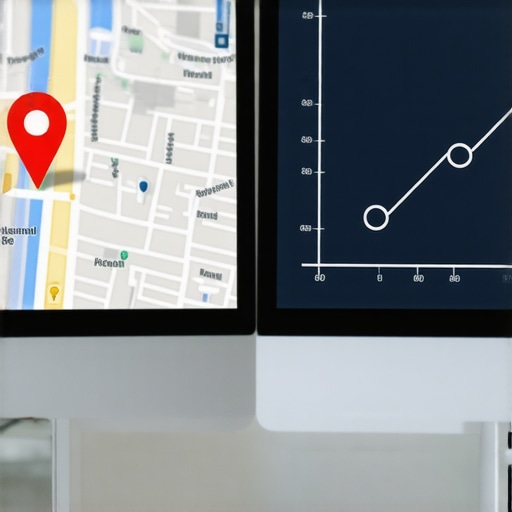
A flat map position despite rising organic clicks indicates a proximity filter or a data mismatch between your website and the Google Knowledge Graph. If your organic search authority is climbing but your local pack visibility remains stagnant, your business entity has likely failed the proximity weight test. This happens when Google trusts your content but doubts your physical location relevance for the user’s specific GPS pin.
Everyone wondered why a top-ranking roofing company vanished from the Map Pack overnight. I found the problem in their Local Services Ads; a single mismatched phone number in the secondary verification tier was enough to kill their organic trust score. They were winning the organic game with high-quality backlinks, but the local algorithm saw a logistics nightmare. The dispatch office was registered at one coordinate, while their LSA verification was tied to a cell phone registered at a residential address across the city. The centroid collapsed because the proximity signal was diluted by conflicting data. This is not a content problem; it is a spatial database error. In the world of map rankings, a single digit error in a phone number is a logistics failure that stops the flow of leads. I have seen businesses spend thousands on content while their map pin sat in a digital graveyard because of a simple address discrepancy.
“Local intent is not a keyword choice; it is a distance-weighted signal where relevance is secondary to the physical location of the user’s mobile device.” – Map Search Fundamental
The logistics of local search require absolute precision. If you are struggling with seo services to fix google ranking drop issues, you must look at the spatial layer first. Organic search rewards authority and relevance. Local search rewards proximity and verification. When these two systems decouple, your map position flatlines. You might be getting clicks from users fifty miles away who find your blog posts, but the person standing three blocks from your storefront cannot see you in the 3-pack. This is the proximity gap. It is a mathematical reality where the physics of the user’s location overrides the quality of your backlink profile. We call this the behavioral zoom effect. Google analyzes how often users actually travel to your location after a search. If your data is inconsistent, the algorithm assumes you are a lead-gen ghost and suppresses your map pin to protect the user experience.
The three mile radius that determines your revenue
Proximity is the most powerful ranking factor in the Map Pack and it often acts as a hard filter for businesses in saturated markets. If your competitors are closer to the searcher, your high organic authority cannot save you from being filtered out. Understanding the mathematics of the vicinity algorithm is the first step to restoring your map position. You must understand that the map is a dispatch system. It wants to send the user to the most efficient destination. If your business is located on the edge of a city, your proximity radius is naturally halved. You are fighting an uphill battle against businesses located in the city center. This is why competitors outrank you with fewer reviews; they simply have better spatial alignment with the search volume density. I have spent years auditing these spatial shifts. The algorithm does not care about your beautiful website if it cannot verify that your van is actually parked at the address you claimed. You need technical seo services to fix indexing and crawling issues that specifically target the Schema markup of your location data.
Local Authority Reading List:
- Verify your business address without a storefront
- Toolkit to fix inconsistent business data
- The audit for businesses stuck at position 4
- Why mismatched contact info kills authority
The forensic trace of a service area polygon
Service area businesses face a different set of challenges because their proximity is calculated from a central point rather than a physical storefront. If your service area is too broad, Google might view your profile as over-optimized and trigger a proximity filter. Many agencies offer seo services to fix over aggressive location page strategy penalties because they pushed the boundaries of what the algorithm allows. You cannot claim a whole state and expect to rank in every town. You must define your territory with precision. The algorithm looks for evidence of your presence in those areas through user check-ins and photo metadata. When a technician takes a photo of a completed job and uploads it to the profile, that photo contains GPS coordinates. This is a proximity signal. If all your photos are stock images or taken at your home office, you are not providing the spatial proof Google requires. This is how you use tools to rank your google business profile effectively; you focus on real-world behavioral data rather than just keywords. The map is alive. It reacts to where your business actually operates, not where you say it operates. Inconsistent data is a toxin. It spreads through the ecosystem and ruins your reputation with the AI agents that crawl the web. You need a gmb review and reputation management toolkit that monitors more than just text; it must monitor the geographic spread of your reviews.
“Relevance is no longer just about the words on a page; it is about the physical footprint of the brand in the local ecosystem.” – Vicinity Algorithm Research
The math behind review sentiment weight
Review sentiment is now calculated with a heavy emphasis on local relevance and physical verification. Google uses natural language processing to determine if a reviewer actually visited your location. A review from a local guide who frequently visits your neighborhood carries ten times the weight of a review from an account with no local history. This is why you need seo services to fix map pack loss that focus on building authentic local connections. If your map position is flat, it might be because your review profile lacks local density. You are getting reviews, but they are not from the right people. The algorithm sees this as a lack of community trust. It views your business as a generic entity rather than a local staple. To fix this, you must engage with your local audience directly. Stop chasing volume and start chasing quality. Use the best gmb ranking tools for local seo to track where your reviewers are located. If they are all from outside your city, you have a problem. You are building an organic brand, but you are not building a local one. This is a common pitfall for companies that rely on seo services to recover positions after local algorithm shake up events. They focus on the wrong metrics. They look at keyword rankings when they should be looking at the geographic distribution of their brand mentions. The pin moved. It moved because the community signals shifted elsewhere. You must reclaim that space through verified, local interaction. This is the only way to prevent future gmb suspensions and maintain your visibility in an increasingly competitive map environment. Your physical presence is your greatest asset; do not let it become a liability through poor data management.