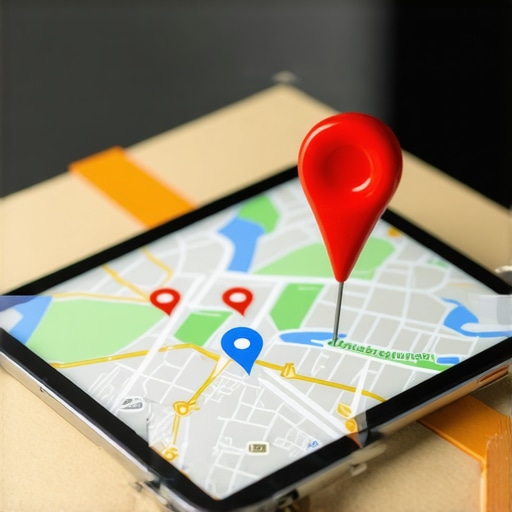
I smell the sharp scent of wet concrete every time I step onto a new client site. It is the scent of a physical reality that Google often refuses to acknowledge. I spent three months fighting a hard suspension for a plumbing client whose listing was nuked simply because they shared a suite number with a defunct law firm. Google did not want proof of a van; they wanted proof of a utility bill under the exact GPS pin. This is the microscopic reality of the local algorithm. A business profile is not just a digital flyer. It is a proximity beacon in a complex spatial database. When you move your physical office, you are not just changing an address; you are shifting the mathematical weight of your local authority. Moving a business address triggers a proximity reset that can erase years of ranking power if the technical verification loop is not handled with forensic precision.
The ghost in the GPS coordinates
The Google Business Profile algorithm prioritizes the physical location of the user mobile device over almost every other ranking factor in the Map Pack. When your pin disappears after a move, it is often because of a coordinate mismatch between your new NAP data and the legacy Wi-Fi triangulation data Google has stored. Every router at your old office broadcast a specific MAC address that Google linked to your brand. Now that you have moved, those signals are gone. You are essentially a ghost in the machine. To fix this, you need a step by step audit to find every error in your map listing before the algorithm flags you for suspicious activity. I have seen businesses lose 80 percent of their call volume because they forgot to update a single secondary citation on a local directory. This inconsistency creates a trust gap that the proximity engine cannot bridge.
“Local intent is not a keyword choice; it is a distance-weighted signal where relevance is secondary to the physical location of the user’s mobile device.” – Map Search Fundamental
The math of proximity is brutal. If your new office is even two miles further away from the city centroid, your ranking floor will drop. You must compensate for this distance by increasing your local justification signals. This means getting real customers to take candid photos at your new location. As a street photographer, I notice the glitch in the storefront data. I see the businesses that use stock photos and the ones that use real, high-resolution images of their new signage. Google sees this too. They use computer vision to verify that your sign is permanent and not just a vinyl banner draped over a coworking space. If you are struggling, you might need how we rebuild trust with Google after a profile suspension strategies to satisfy the manual reviewers who are looking for any reason to keep your pin hidden.
Why your physical address is a liability
A business address is a data point that must be defended with physical evidence like utility bills and lease agreements. Many agencies sell citation blasts to dead directories, but these often do more harm than good when you are in the middle of a relocation. If Google finds your old address on a legacy site while you are trying to verify a new one, it triggers a conflict. You should focus on standardizing your phone number across the web for local seo to ensure the algorithm sees a unified front. The street level truth is that Google suspects everyone of map spam. They have seen too many address rentals and fake suite numbers. If you move into a building that previously hosted a suspended business, you are walking into a minefield. You will need a google business profile recovery service after fake address suspension to navigate the appeal process if your new pin gets caught in the crossfire of a neighborhood-wide sweep.
Local Authority Reading List
- Keeping Your Map Rank During a Website Move
- Framework for Auditing Saturated Markets
- Recovering from Mass Review Deletion
- How to Move Your Pin Into the Top 3
The three mile radius that determines your revenue
Proximity remains the single most powerful ranking factor in the local ecosystem for service area businesses and brick and mortar shops alike. If you move outside the primary service cluster, you are effectively starting from zero. The algorithm calculates a three mile radius for most high-competition searches. If you are on the edge of that circle, your visibility will flicker. You need to investigate why being close enough is still keeping you out of the local 3 pack to understand the density of your competitors. I often tell clients that their new office location is more than just real estate; it is an SEO asset. If you move into a desert where no competitors exist, you might rank easily, but there might be no search volume. If you move into a dense cluster, you will need a map pack toolkit for pros who are tired of being invisible to survive the pressure.
“Verification is the bridge between digital intent and physical reality; if the bridge collapses during a relocation, the authority vanishes instantly.” – Location Intelligence Quarterly
The behavioral signals are the next layer. When customers start clicking on your new address and using Google Maps to navigate there, the algorithm receives a positive confirmation signal. These real world check-ins are worth more than a hundred fake citations. I have seen businesses try to cheat this by using VPNs, but the forensic trace of a VPN is obvious to the spam team. It is better to focus on how to build a review system that customers actually use at the new location. Every review that mentions your new neighborhood helps anchor your pin in that specific geographic context. This is how you reclaim your rankings. You prove to the machine that you are a living, breathing part of the new community. You can even download gmb ranking tools for local seo to track how your proximity bubble expands as you gain more local mentions.
The math of centroid shifts and local authority
A change in your office coordinates alters your relationship to the city centroid and your primary competitors. This shift can cause a total ranking wipeout if your website content still points to the old neighborhood. You must update your local landing pages and technical schema. I recommend how technical website fixes directly impact your local map position because broken redirects can bleed your authority during a move. If your old location pages are throwing 404 errors, Google will assume the business is defunct. You need to engage in technical seo services to fix indexing and crawling issues immediately after your address change is approved. This ensures the search bots see the new data as soon as possible. The pin did not just disappear; it moved into a state of uncertainty. Your job is to provide the certainty the algorithm requires. This includes performing a quick profile health check with a local audit tool every week for the first three months. Watch for phantom duplicates. Sometimes Google will create a new listing for your new address rather than moving the old one. If this happens, you must know how to spot and fix duplicate business listings before they merge incorrectly and cost you your reviews.
Rebuilding the trust signals from scratch
Reclaiming a lost ranking requires a combination of physical verification and aggressive reputation management. If your move was triggered by a rebranding, the challenge is even greater. You are trying to transfer authority from one entity to another. You should follow the guide on transferring local authority during a complete brand migration to avoid a permanent drop. Also, keep a close eye on your reviews. Sometimes a move triggers a review removal glitch where old reviews vanish because Google thinks the new location is a different business. If this happens, you need a gmb review and reputation management toolkit to gather new, verified feedback quickly. Don’t let the frustration of a disappearing pin lead you to spammy tactics. Using seo services to clean up ai generated spam content penalties is a common path for those who panicked and tried to automate their recovery. Stay grounded in the physical reality of your new office. Take the photos. Pay the bills. Update the site. The rankings will follow the evidence of your existence. Final thoughts focus on the long game. Local SEO is not a sprint; it is a battle for space. When you move, you are claiming new territory. Do it with the precision of a surveyor and the skepticism of an investigator. Your map pin is your most valuable asset. Protect it like the front door of your shop. If you find your website is lagging, consider why a slow website is destroying your local map visibility and fix it alongside your profile updates. Consistency is the only currency the Map Pack accepts.