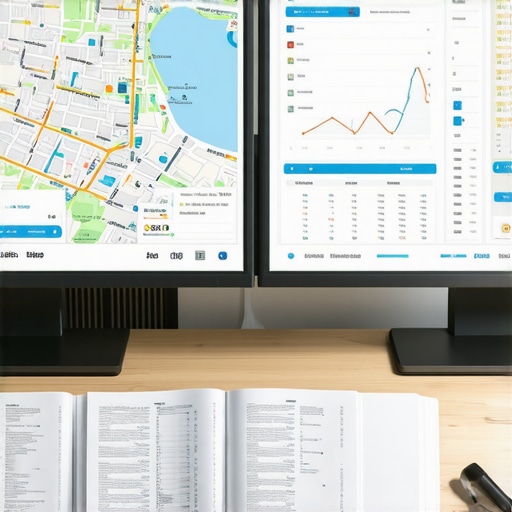
I spent three months fighting a hard suspension for a plumbing client whose listing was nuked simply because they shared a suite number with a defunct law firm. Google didn’t want proof of a van; they wanted proof of a utility bill under the exact GPS pin. That was the day I realized how fragile local visibility truly is. The digital storefront is not merely a collection of words on a page. It is a spatial beacon sitting within a highly volatile database. Many local merchants believe they can bypass this physical reality by purchasing cheap subscriptions. They hope some automated sequence will instantly elevate them into the three-pack. That belief is incorrect. Buying software without understanding spatial algorithms is like purchasing a premium diagnostic computer for a truck that has no engine.
“Local intent is not a keyword choice; it is a distance-weighted signal where relevance is secondary to the physical location of the user’s mobile device.” – Map Search Fundamental
The illusion of rapid local positioning
Buying local SEO software or using automated tools will not instantly rank your Google Business Profile because real-world proximity and Google’s verification standards are highly dependent on real physical signals rather than virtual data points. Most programs simply format your information or check existing directory listings. They do not alter the physical distance between your shop and the searcher’s phone. To understand why automated packages often fall short, you must realize that geographic relevance is computed in milliseconds based on hardware coordinates and active cell towers. A platform can submit your name to fifty obscure sites, but it cannot move your actual office closer to your target customers.
The marketplace is flooded with promises of rapid progress. Business owners buy these subscriptions hoping for a shortcut. The software scans your profile and shows a red or green indicator. It might say your profile is ninety percent optimized. Yet, your phone remains completely silent. The program is measuring basic field completion, not the strength of your local authority. To understand this gap, read the truth about google business profile ranking software data. Real authority is built on consistent consumer interactions, geo-tagged uploads, and clean real-world citations. It is not built on a tool that merely checks a box.
The physics of the three mile radius
Proximity is the most stubborn ranking factor in the local search ecosystem. The search engine draws a digital boundary around the user’s device. If you are outside that boundary, no amount of automated keyword density will pull you into the map pack. The algorithm prioritizes proximity to prevent national brands from crowding out local providers. This spatial filter is incredibly strict. If your service truck is located ten miles away, you are mathematically excluded from high-priority terms unless your authority score is exceptionally high.
Understanding this math is essential before you purchase any digital toolkit. Many dashboards claim to track your performance across an entire county. They display a single average position score that makes everything look excellent. This is a common mirage. If you test your positions at individual intersections, you will find your visibility vanishes just two blocks from your office. To see how these tools obscure your actual reach, you should study why most gmb ranking software fails to track proximity correcty. True progress requires analyzing spatial grids rather than global averages.
Local Authority Reading List
- Find out why your positions might look static: Why Your Map Position Stays Flat While Organic Clicks Grow
- Understand the limits of automated directory submissions: Why Automated Citation Tools Often Leave a Mess Behind
- Learn how to handle unexpected profile suspensions: How to Beat the Fake Address Suspension and Reclaim Your Listing
- Compare the financial trade-offs of tools versus consultants: Why Buying a GMB Ranking Toolkit is Better Than Paying Monthly Agency Fees
The hidden cost of automated directory builders
Automated citation distributors frequently create fragmented record systems that confuse search crawlers due to mismatched name, address, and phone number fields. When you click a button to generate one hundred listings instantly, the script runs across outdated directories. These systems use scraping tools that often grab legacy data from old telephone registries. This process creates conflicting profiles across the web. The search engine’s scraper notes these differences and lowers your overall trust score.
A business needs clean data to establish a secure geographic anchor. If a tool places your street number in the secondary address field on one site and omits it on another, you have created a discrepancy. This conflict ruins your ranking potential. Clean, manual directory work is always superior to automated blasts. Business owners often find that repairing these automated errors takes months of manual labor. To avoid these issues, research why your local citation cleanup is taking so long to work. A single accurate profile on a highly trusted local platform is worth more than five hundred low-quality links on expired domains.
The threat of algorithmic suspensions
Using tools to force rapid optimization often triggers automated flags that lead to immediate profile suspensions. Google’s spam prevention systems constantly scan for unnatural patterns. If you use a tool to edit twenty physical locations simultaneously, the algorithm identifies this as automated behavior. The system assumes a bot has hijacked the listings. The next morning, you will find your business has been removed from search results. This causes massive disruptions in inbound phone calls and leads.
Reclaiming a suspended profile is an exhausting process. You must submit physical deeds, tax records, and real utility bills to prove you actually occupy the space. If you used a virtual office or a shared workspace, your appeal will likely be rejected. The system demands transparent, physical proof of operation. If your profile is currently disabled, look at fixing the common errors in gmb profile reinstatements. This practical guide walks you through the precise documentation required to restore your digital footprint.
“Consistency of location data across independent sources acts as a secondary verification layer, confirming that the physical entity operates exactly where it claims.” – Location Intelligence Quarterly
The diagnostic toolkit you actually need
A highly effective local optimization program focuses on tracking local spatial trends and diagnosing technical inaccuracies rather than buying automatic link packages. You must understand how to use tools to rank your google business profile safely. Valid utilities do exist. They assist with grid tracking, reputation monitoring, and coordinate validation. They show you exactly where your coverage drops off so you can address those specific zip codes through targeted community outreach and local content.
Instead of seeking a magic automated fix, look for software that helps you find errors in your existing footprint. This includes identifying duplicate profiles, spotting tracking number conflicts, and monitoring customer reviews. An excellent diagnostic toolkit highlights where your data is broken so you can repair it. If you want to invest in software that truly supports your business, read about the toolkit comparison gmb ranking features every local pro needs. Focus on diagnostics, not shortcuts.
The framework for real organic recovery
Recovering your local visibility after an algorithm update or a profile drop requires a meticulous audit of your content, citations, and reviews. If you experience a sudden drop in positions, do not panic and buy more software. Panic leads to poor decisions like purchasing cheap backlink bundles. These links are easily detected by spam filters and will cause further damage to your organic trust. You must systematically analyze what went wrong.
The first step is checking for inconsistent contact information across your core digital assets. Next, verify that your primary business category has not been altered. Even minor changes to your main category can cause your rankings to drop. If your traffic has suddenly vanished, you need to execute a diagnostic protocol. Take a look at how to debug a sudden local ranking crash in under an hour. This clear framework helps you isolate the issue, whether it is a technical site error, a competitor spam attack, or an algorithmic filter.
The truth about fast local rankings
The local map pack is a reflection of real-world authority. No software can replace the trust generated by real customers leaving authentic reviews from their own mobile devices while standing inside your store. The system tracks these geographic signals. It knows when a review is written by a real patron versus an offshore click farm. Genuine engagement remains the ultimate ranking factor. Work on your business footprint, secure your local citations, and use diagnostic software to keep your data clean. The rankings will follow naturally.