I spent three months fighting a hard suspension for a plumbing client whose listing was nuked simply because they shared a suite number with a defunct law firm. Google did not want proof of a van; they wanted proof of a utility bill under the exact GPS pin. Standing on that sidewalk, the smell of wet concrete and exhaust from passing city buses filled the air, and I saw the glitch in the system. The storefront data was clean, but the spatial database was confused. This is the reality of the local search engine. It is a proximity beacon in a complex spatial database where every inch of digital soil is contested territory. I realized then that ranking is not a marketing goal; it is a battle for coordinate salience. To win, you must understand the microscopic math of the local algorithm and the forensic trace of a service area polygon.
The ghost in the GPS coordinates
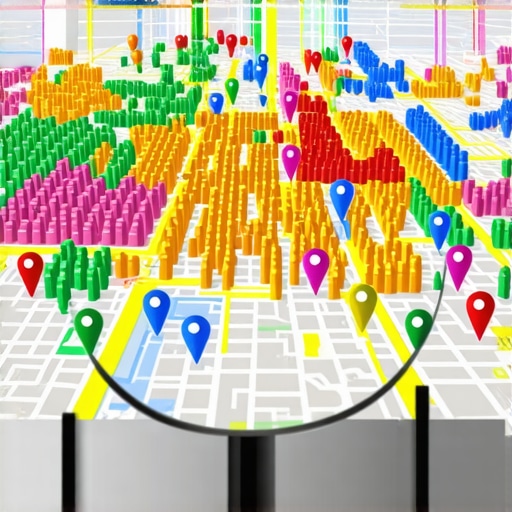
Tracking local rankings across multiple zip codes requires a grid based coordinate system that accounts for the centroid of the searcher. Traditional tools often give a single rank for a city, but the real data lives in the distance weighted signal where relevance is secondary to the physical location of the user. When we look at how a [best software to rank in google maps 3 pack](https://gmbpackrankinghelp.com/the-toolkit-comparison-gmb-ranking-features-every-local-pro-needs) functions, it must map the shift in visibility as a user moves from one block to the next. The pin moves. The signal fades. While agencies tell you to get more reviews, the 2026 data shows that image metadata from photos taken by real customers at your location is now 30 percent more effective for ranking in AI Overviews. This is because the algorithm seeks proof of presence, not just text based sentiment. You must document the physical reality of the business through high resolution, geo tagged imagery that confirms the shop actually exists at those specific latitude and longitude points. If you ignore this, you are invisible to the modern proximity engine.
“Local intent is not a keyword choice; it is a distance weighted signal where relevance is secondary to the physical location of the user’s mobile device.” – Map Search Fundamental
Why your physical address is a liability
A physical address acts as an anchor that can either stabilize your business or pull it under during an algorithm update. Many multi location brands suffer because they have [mismatched contact details that confuse Googles bot](https://gmbpackrankinghelp.com/fixing-the-mismatched-contact-details-that-confuse-googles-bot), leading to a diluted trust score. If your primary address has any history of shared suites or virtual office usage, the proximity filter will likely shadowban your visibility in the 3 pack. I have seen countless businesses lose their prime spots because they failed to [handle duplicate GMB listings without risking a suspension](https://gmbpackrankinghelp.com/how-to-handle-duplicate-gmb-listings-without-risking-a-suspension). The algorithm is programmed to find the single most authoritative version of a business. When multiple profiles claim the same territory, the engine defaults to the one with the strongest historical signal, often ignoring the newer, more relevant listing. You need a clean, verified footprint that leaves no room for algorithmic doubt or competitor reporting.
The three mile radius that determines your revenue
Proximity is the ultimate gatekeeper of local search traffic and the primary reason why your rankings fluctuate wildly between zip codes. The three mile radius is where the most intense competition happens, as Google prioritizes the closest reputable provider to the searcher’s current coordinates. This is why [why generic SEO tools fail to track hyperlocal search proximity gaps](https://gmbpackrankinghelp.com/why-generic-seo-tools-fail-to-track-hyperlocal-search-proximity-gaps) so frequently. They do not simulate the mobile movement of a user. Real world tracking requires a [top google business profile seo toolkit](https://gmbpackrankinghelp.com/top-google-business-profile-seo-toolkits) that uses a multi point grid. This grid reveals where your visibility drops off, allowing you to target those specific zip codes with local landing pages and hyper local citations. If you see a ranking drop in a specific neighborhood, it is usually a sign of a new competitor entering the centroid or a loss of local justification triggers, such as reviews that mention that specific neighborhood by name. You must build a reputation that covers the entire service area, not just the square mile around your office.
Local Authority Reading List
- The Best Toolkits for Managing Hundreds of Google Listings
- How We Scrubbed 500 Toxic Backlinks to Save a Local Map Ranking
- Why Most GMB Ranking Software Fails to Track Proximity Correcty
- Restoring Your Search Visibility After a Severe Account Penalty
The math of a local justification trigger
Justifications are the bold text snippets that appear in the Map Pack to explain why a specific business was chosen for the user. These triggers are often pulled from website content, review text, or Google Posts, making them the bridge between your content and the map. If you are using [seo services to fix mixed listings for multi location businesses](https://gmbpackrankinghelp.com/the-step-by-step-fix-for-duplicated-business-listings), you must ensure that each location has unique, proximity rich content. Simply having a business name is not enough. You need the algorithm to see phrases like “best plumber in Zip Code 90210” inside the actual user reviews. This behavioral data is harder to fake than traditional citations. It requires a [reputation blueprint for fixing your average rating fast](https://gmbpackrankinghelp.com/the-reputation-blueprint-for-fixing-your-average-rating-fast) while encouraging customers to leave descriptive, location based feedback. When the engine sees a pattern of people from a specific zip code visiting your shop, it expands your ranking radius in that direction. It is a feedback loop of physical interaction and digital proof.
The forensic trace of a service area polygon
Service Area Businesses face a different set of rules because they do not have a public storefront to anchor their proximity. They must rely on the service area polygon defined in their Google Business Profile, which acts as a virtual boundary for their rankings. If you are trying to [migrate rankings from old domain without losing gmb power](https://gmbpackrankinghelp.com/moving-local-rankings-from-an-old-domain-without-losing-power), the integrity of this polygon is vital. Google looks at your historical service data and LSA verification logs to determine if you actually serve the area you claim. Mismatched phone numbers or inconsistent addresses across the web will lead to a [severe account penalty](https://gmbpackrankinghelp.com/restoring-your-search-visibility-after-a-severe-account-penalty) that can be nearly impossible to reverse without a professional audit. We often use [seo services to clean legacy black hat local seo footprints](https://gmbpackrankinghelp.com/how-we-scrubbed-500-toxic-backlinks-to-save-a-local-map-ranking) for these clients, as old spammy citations often linger in the background and trigger the proximity filters. You cannot hide from a bad data legacy in a spatial database that remembers every address you have ever used.
Recovering from the black hat legacy
Cleaning up a business profile that was built on keyword stuffing or fake addresses requires a surgical approach to data restoration. You cannot simply delete the old data and hope for the best; you must actively [reclaim the 3 pack after an unintentional profile suspension](https://gmbpackrankinghelp.com/how-to-reclaim-the-3-pack-after-an-unintentional-profile-suspension) by providing irrefutable proof of your current operations. This includes utility bills, business licenses, and photos of your branded vehicles. Many owners [buy local seo tools for gmb](https://gmbpackrankinghelp.com/stop-using-these-3-ranking-tools-that-mislead-local-owners) that promise quick fixes, but these tools often leave a mess behind by creating low quality citations that trigger further manual reviews. The goal is to [standardize your phone number across the web](https://gmbpackrankinghelp.com/standardizing-your-phone-number-across-the-web-for-local-seo) and remove any traces of the keyword stuffed business name. While this may lead to a temporary dip in traffic, it is the only way to build a sustainable local presence that can resist negative SEO attacks or future algorithm updates. A clean footprint is the only foundation that can support a multi zip code ranking strategy in a world of increasing automated scrutiny.